
Back Pain 101: What Every Caregiver Needs to Know
Back pain is one of the most common—and most overlooked—challenges family caregivers face. If you’ve ever helped a loved one out of bed, lifted someone from a wheelchair, or leaned over a bathtub trying to help with a bath, you already know: caregiving is physically demanding. Over time, that daily strain can wear you down, leading to aches, stiffness, or even serious injury. Here at Genuine Global Care, our goal is to help both family caregivers, and caregivers on the job stay safe.
According to the Centers for Disease Control and Prevention (CDC), back pain is one of the leading causes of disability in the U.S., affecting nearly 8% of adults and costing billions each year in lost productivity and health care. But for unpaid family caregivers, the toll is even greater—because the pain isn’t just physical. It affects your energy, your sleep, your mood, and your ability to keep showing up for the person who needs you.
This guide is for non-medical caregivers—sons, daughters, spouses, friends—who are helping someone at home. It’s also for caregivers working in facilities or private homes without formal medical training. You don’t need a degree in physical therapy to take care of your own body. You just need the right information and a few good habits.
Why So Many Caregivers Struggle with Back Pain
Caregivers lift, twist, reach, bend, stoop, and stretch—usually without even realizing it. These movements may not seem like much at the time, but over weeks and months, they add up. The most common reasons caregivers experience back pain include:
- Improper lifting – Many people bend at the waist instead of the knees.
- Awkward positioning – Like leaning over a bed or twisting to pull someone up.
- Repetitive strain – Doing the same motion every day, especially without rest.
- Fatigue – Being tired affects your posture and coordination, increasing injury risk.
- Lack of equipment – No gait belts, grab bars, or shower chairs to reduce strain.
And then there’s the emotional side. Caregiving is exhausting. When you’re sleep-deprived, overwhelmed, and emotionally drained, your body suffers too. You might ignore pain or push through discomfort because someone else’s needs feel more urgent than your own.
The Risks of Ignoring the Pain
You might think, “It’s just a little soreness,” or “I’ll rest later.” But untreated back pain can quickly spiral into something more serious—herniated discs, nerve damage, or chronic conditions that are harder to treat.
According to the National Institute of Neurological Disorders and Stroke (NINDS), most cases of lower back pain are mechanical in nature—meaning they stem from wear and tear, poor posture, or improper movement. The good news is that these causes are preventable with the right approach.
How to Protect Your Back: Real-World Tips for Everyday Caregivers
You don’t need to overhaul your entire routine to make a big difference. Small changes can protect your spine and keep you strong for the long haul.
1. Learn Back-Safe Movement
- Lift with your legs, not your back – Bend at your knees and hips. Keep your back upright and straight.
- Keep the load close to your body – Whether it’s a person or a laundry basket, holding things close helps maintain your center of gravity.
- Avoid twisting – Always turn your whole body. Pivot your feet instead of twisting your torso.
- Use both hands – Relying on one side causes imbalance and strain.
2. Use Tools That Make It Easier
You’re not weak for needing help—you’re wise. Look into:
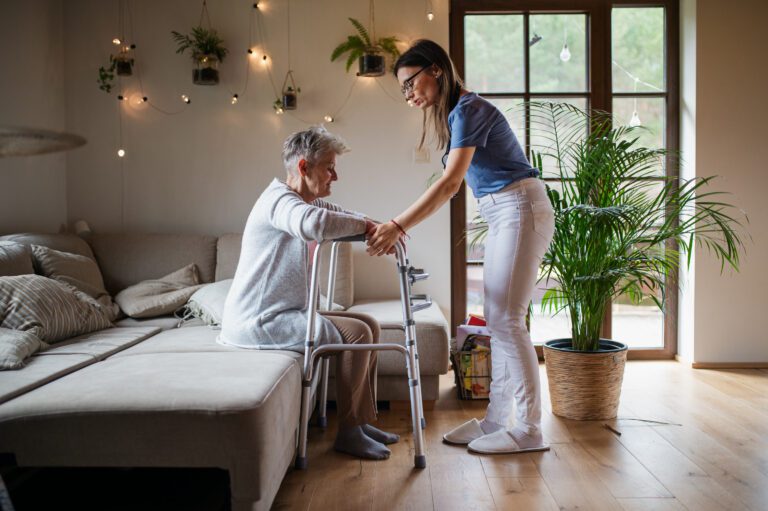
- Gait belts for safer lifting
- Bed rails or transfer poles
- Shower chairs and raised toilet seats
- Reachers or grabbers for picking up items
- Non-slip mats to prevent slips and awkward catches
Local Area Agencies on Aging often provide or recommend these tools at low or no cost.
3. Strengthen Your Core
Your core isn’t just about abs—it includes muscles in your back, hips, and pelvis that support every move you make. Try low-impact movements like:
- Pelvic tilts
- Bridges
- Modified planks
- Walking or gentle yoga
Just 10–15 minutes a day can improve stability and reduce pain.
4. Make Rest a Priority
You’re not a machine. Caregivers often skip meals, ignore water, and sacrifice sleep. But rest isn’t a luxury—it’s fuel. When you’re depleted, your muscles are more prone to injury.
Build breaks into your day, even if it’s five minutes to stretch, breathe, or sit in silence. Let someone else help, even if they don’t do things the “right” way. Your health matters too.
What to Do If You Already Have Back Pain
If you’re currently experiencing back pain:
- Stop lifting – Rest from physical strain for a few days.
- Apply cold compresses for 24–48 hours to reduce inflammation, then switch to heat.
- Stay gently active – Movement helps. Don’t stay in bed unless advised by a doctor.
- Use OTC pain relievers as needed (consult your doctor if you’re unsure).
If the pain is sharp, shooting down your leg, or interfering with your ability to function, see a medical provider. You may need physical therapy, stretching plans, or medication.
When the Pain Is Emotional Too
Many caregivers carry emotional pain that settles into the body—grief, guilt, loneliness, or fear. Stress tightens your muscles. Anxiety shortens your breath. These emotional burdens often land squarely in your shoulders, neck, and lower back.
You’re not weak for feeling this. You’re human. Talk to someone. Reach out to caregiver support groups, faith communities, or counseling services. The Family Caregiver Alliance and Caregiver Action Network offer free resources to help you navigate both the physical and emotional toll.
You’re Not Alone—And You Don’t Have to Hurt
Caring for someone you love is one of the most meaningful things you’ll ever do. But it shouldn’t come at the cost of your own health. You deserve to be strong, supported, and pain-free.
Start small. Adjust how you lift. Ask for help. Take care of you.
Your back—and your future self—will thank you.
Need extra support in your caregiving journey? At Genuine Global Care we’re here for you. If you’re looking for trained home care professionals or just need guidance on how to care safely at home, we’re just a call away. Contact us today.